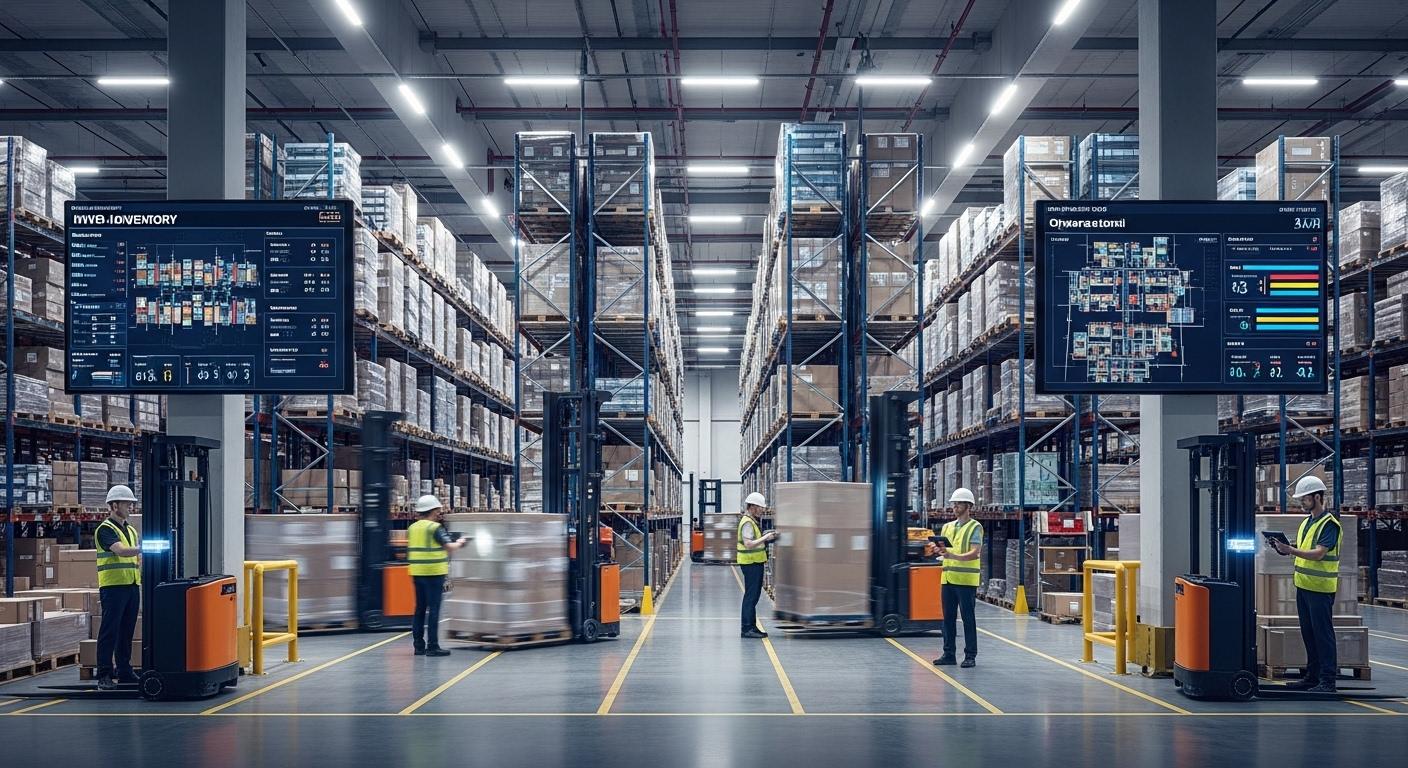
Effective warehouse management is a critical pillar of modern logistics. As supply chains grow more complex and customer expectations continue to rise, warehouses are no longer just storage spaces—they are productivity hubs that directly influence cost, speed, safety, and service quality.
Effective warehouse management is a critical pillar of modern logistics. As supply chains grow more complex and customer expectations continue to rise, warehouses are no longer just storage spaces—they are productivity hubs that directly influence cost, speed, safety, and service quality.
Maximizing productivity in warehouse operations requires a balance of smart processes, trained personnel, and the right technology.
Understanding Warehouse Productivity
Warehouse productivity refers to how efficiently space, labor, equipment, and time are used to handle goods. High productivity means faster order processing, reduced errors, better inventory accuracy, and lower operational costs—all without compromising safety.
In project and industrial logistics, warehouse efficiency also ensures materials are available exactly when needed, supporting uninterrupted project execution.
Optimizing Layout and Space Utilization
A well-designed warehouse layout is the foundation of productivity. Clear zoning for receiving, storage, picking, packing, and dispatch reduces unnecessary movement and congestion.
Vertical storage systems, proper racking, and optimized aisle spacing help maximize available space while maintaining safe operations. Efficient space utilization allows warehouses to handle higher volumes without expansion.
Inventory Accuracy and Control
Accurate inventory management is essential to productivity. Poor visibility leads to delays, misplaced goods, and operational inefficiencies.
Using barcode systems, RFID, or digital inventory platforms improves tracking accuracy and reduces manual errors. Real-time inventory data ensures teams can plan effectively and respond quickly to demand changes.
Leveraging Technology and Automation
Technology plays a major role in modern warehouse management. Warehouse Management Systems (WMS) streamline operations by coordinating receiving, storage, picking, and shipping processes.
Automation—such as conveyor systems, automated picking tools, and digital documentation—reduces repetitive manual tasks, improves speed, and enhances consistency across operations.
Workforce Training and Safety
A productive warehouse is built on a skilled and safety-conscious workforce. Proper training ensures employees understand processes, equipment handling, and safety protocols.
Safety and productivity go hand in hand. Reducing accidents and downtime through strict safety standards and preventive maintenance keeps operations running smoothly and protects both people and assets.
Continuous Improvement and Performance Tracking
Productivity is not a one-time achievement—it requires continuous monitoring and improvement. Key performance indicators such as order accuracy, turnaround time, and space utilization help identify areas for optimization.
Regular process reviews and performance analysis allow warehouse teams to adapt, improve efficiency, and scale operations as business needs evolve.
The Role of Warehousing in Modern Logistics
In today’s logistics environment, warehouses serve as strategic control points within the supply chain. Efficient warehouse management supports faster deliveries, lower costs, and greater reliability—key factors in meeting modern customer and project requirements.
By combining smart layout design, technology, trained personnel, and a safety-first approach, logistics providers can maximize warehouse productivity and strengthen overall supply chain performance.