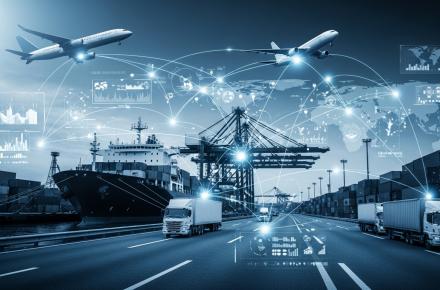
Artificial Intelligence (AI) is rapidly redefining the logistics industry. As supply chains grow more complex and projects become increasingly time-critical, AI is moving logistics beyond manual coordination into an era of predictive, intelligent, and highly efficient operations.
Artificial Intelligence (AI) is rapidly redefining the logistics industry. As supply chains grow more complex and projects become increasingly time-critical, AI is moving logistics beyond manual coordination into an era of predictive, intelligent, and highly efficient operations.
For modern logistics providers, AI is not about replacing human expertise—it is about enhancing decision-making, reducing risk, and delivering greater control across every stage of cargo movement.
From Reactive to Predictive Logistics
Traditionally, logistics has relied on experience and reactive problem-solving. AI changes this by enabling predictive logistics. Through data analysis, pattern recognition, and real-time inputs, AI systems can anticipate delays, identify bottlenecks, and recommend alternative routes or solutions before disruptions occur.
For project and heavy-cargo logistics, this predictive capability is critical. Early insight into risks can mean the difference between an on-time delivery and costly project delays.
Smarter Planning and Route Optimization
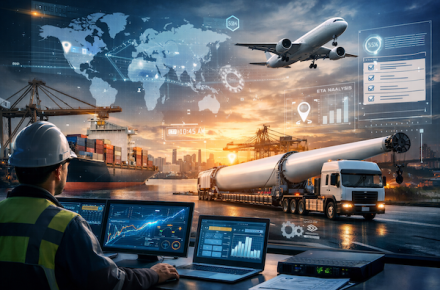
AI-driven planning tools analyze vast amounts of data—including weather conditions, infrastructure constraints, traffic patterns, and regulatory requirements—to design the most efficient and safest routes.
In complex logistics operations involving oversized or heavy-lift cargo, AI supports engineers by enhancing route feasibility studies and helping teams choose optimal transport modes and schedules.
Real-Time Visibility and Decision Support
AI enhances real-time tracking systems by transforming raw data into actionable insights. Instead of simply showing where cargo is, AI-powered platforms can assess performance, detect anomalies, and trigger alerts when conditions change.
This level of visibility empowers logistics teams and clients to make faster, better-informed decisions—reducing uncertainty and improving overall project control.
Automation and Operational Efficiency
AI is also driving automation across logistics workflows. From document processing and customs compliance checks to reporting and performance analysis, automation reduces manual effort and minimizes errors.
By streamlining routine tasks, logistics professionals can focus more on strategic planning, safety oversight, and client engagement—areas where human expertise remains essential.
Enhancing Safety and Risk Management
Safety is a cornerstone of logistics, especially for high-risk and project-based operations. AI supports safety through predictive maintenance, risk modeling, and digital safety assessments.
By analyzing historical data and real-time conditions, AI tools help identify potential hazards early, supporting safer execution and reducing operational risk.
AI as a Strategic Advantage
As AI adoption increases, logistics providers who successfully integrate intelligent systems into their operations will gain a significant competitive edge. The future belongs to companies that combine technology with engineering expertise, strong networks, and a safety-first culture.
AI is not a standalone solution—it is a powerful enabler when aligned with experienced teams and well-designed logistics processes.
Looking Forward
The role of AI in logistics will continue to expand as technology evolves and data becomes more accessible. From planning and execution to reporting and optimization, AI will shape how logistics companies deliver value in an increasingly complex global environment.
At Cosara Project Logistics, we view AI as a tool that strengthens precision, transparency, and accountability—supporting our mission to deliver engineered logistics solutions for complex projects.