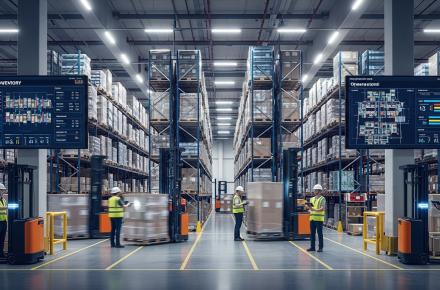
Inventory management services focus on ensuring that the right products are available in the right quantities at the right time. Logistic providers employ advanced forecasting techniques and data analytics to anticipate demand patterns and avoid stoc...
A modern urban logistics scene showing delivery vans navigating city streets, cyclists or small delivery vehicles, smart traffic systems, and digital route overlays on a city map. High-rise buildings, busy intersections, and real-time tracking visuals. Clean, futuristic, professional style representing last-mile delivery and urban logistics innovation.
Global trade is the backbone of the logistics industry, but it has never been more complex. From regulatory changes and geopolitical shifts to infrastructure constraints and supply chain disruptions, logistics providers must continuously adapt to keep goods moving efficiently and safely across borders.
Effective warehouse management is a critical pillar of modern logistics. As supply chains grow more complex and customer expectations continue to rise, warehouses are no longer just storage spaces—they are productivity hubs that directly influence cost, speed, safety, and service quality.
The logistics industry is entering a defining era. Rapid technological advancement, evolving global trade patterns, and increasing pressure for efficiency and transparency are reshaping how goods move across the world. For businesses managing complex or project-based logistics, understanding these trends is critical to staying competitive and resilient.