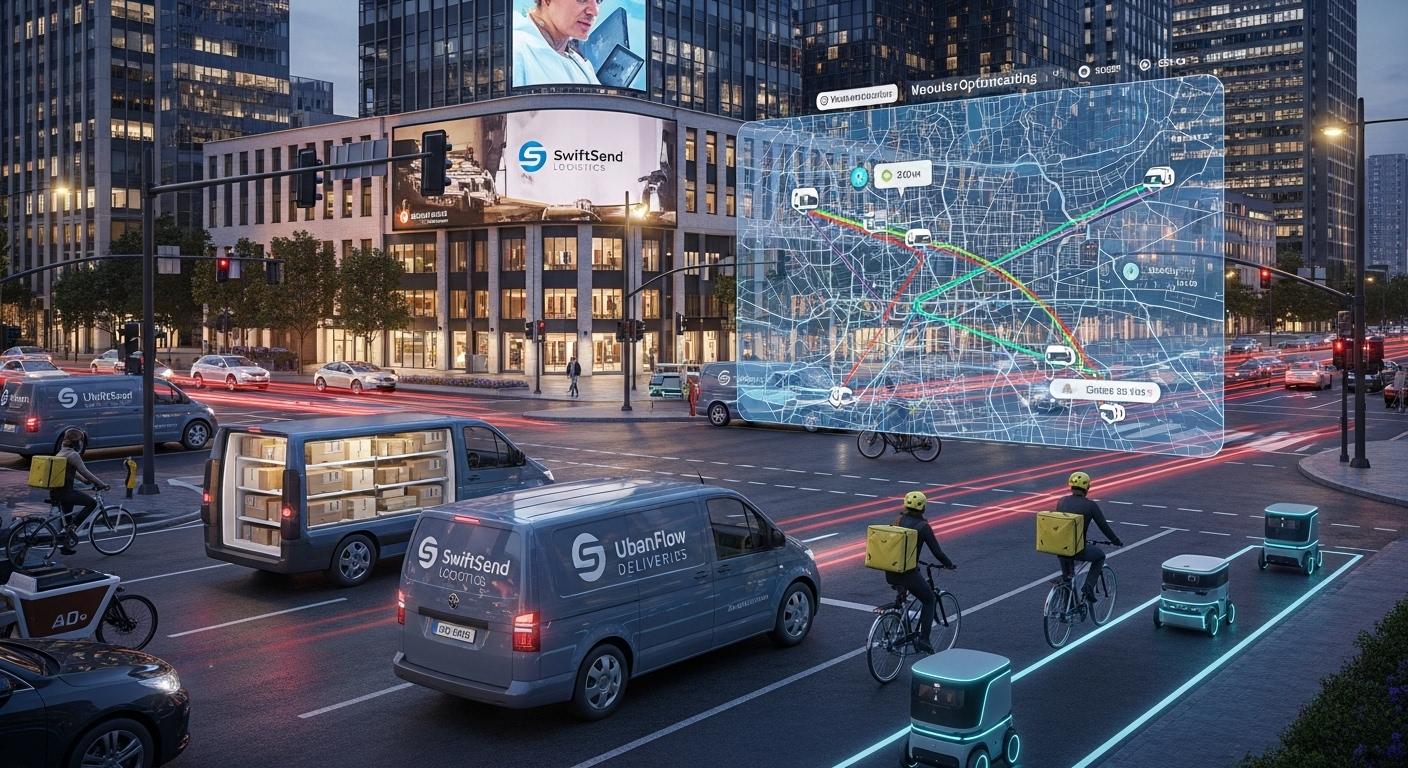
A modern urban logistics scene showing delivery vans navigating city streets, cyclists or small delivery vehicles, smart traffic systems, and digital route overlays on a city map. High-rise buildings, busy intersections, and real-time tracking visuals. Clean, futuristic, professional style representing last-mile delivery and urban logistics innovation.
Last-mile delivery has become one of the most dynamic and challenging areas of modern logistics. As cities grow denser and customer expectations continue to rise, the final stage of delivery now plays a critical role in overall supply chain performance. Speed, accuracy, sustainability, and customer experience are reshaping how urban logistics operates.
Why Last-Mile Delivery Matters More Than Ever
The last mile is often the most expensive and complex part of the delivery process. Urban congestion, limited access points, traffic restrictions, and tight delivery windows create operational challenges that require smarter planning and execution.
At the same time, customers expect faster deliveries, real-time updates, and flexible delivery options—making last-mile logistics a key differentiator.
Technology Driving the Urban Delivery Shift
Technology is at the heart of the last-mile revolution. Route optimization software, GPS tracking, and real-time analytics help delivery teams navigate congested city environments more efficiently.
Digital platforms also improve communication between drivers, dispatchers, and customers, reducing delays and improving overall delivery accuracy.
Smarter Routing and Micro-Fulfillment
Urban logistics is increasingly supported by micro-fulfillment centers located closer to end customers. These smaller hubs reduce delivery distances, improve response times, and help manage high order volumes in dense areas.
Advanced routing algorithms further enhance efficiency by adapting routes in real time based on traffic, weather, and delivery priorities.
Sustainability and Urban Delivery
Environmental concerns are shaping the future of last-mile delivery. Cities are implementing emissions regulations, low-emission zones, and vehicle restrictions to reduce pollution.
Logistics providers are responding by adopting electric vehicles, optimizing routes to reduce fuel consumption, and exploring alternative delivery methods that support sustainability goals without sacrificing efficiency.
The Role of Data and Visibility
Real-time tracking and delivery visibility are now standard expectations in urban logistics. Customers want to know when their delivery will arrive and logistics teams need accurate data to manage performance and resolve issues quickly.
Data-driven insights also support continuous improvement by identifying bottlenecks, delays, and opportunities for optimization.
Challenges and the Road Ahead
Despite innovation, last-mile delivery remains complex. Infrastructure limitations, regulatory constraints, and rising operational costs require ongoing adaptation.
The future of urban logistics will depend on collaboration between logistics providers, city authorities, technology developers, and businesses to create efficient, sustainable delivery ecosystems.
Looking Forward
The last-mile delivery revolution is transforming urban logistics into a smarter, more responsive, and customer-focused operation. Companies that embrace technology, flexible planning, and sustainable practices will be best positioned to succeed in rapidly evolving city environments.
By continuously adapting to urban challenges, logistics providers can deliver faster, safer, and more reliable last-mile solutions that meet modern expectations.