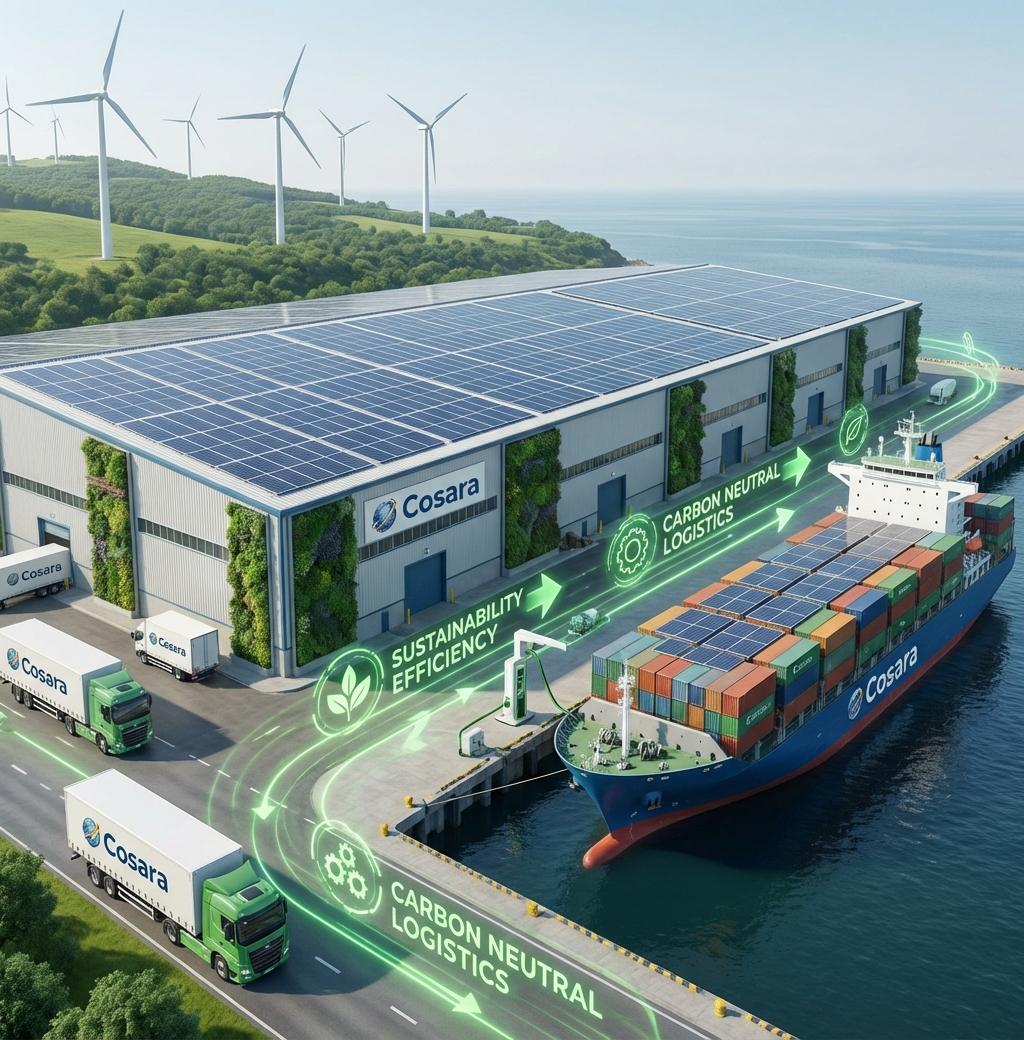
Sustainability is no longer a long-term aspiration in logistics—it is a present-day responsibility. As global trade expands and environmental expectations rise, logistics providers are under increasing pressure to reduce their environmental impact while maintaining efficiency, reliability, and safety.
Sustainability is no longer a long-term aspiration in logistics—it is a present-day responsibility. As global trade expands and environmental expectations rise, logistics providers are under increasing pressure to reduce their environmental impact while maintaining efficiency, reliability, and safety.
Green logistics focuses on achieving this balance by integrating environmentally responsible practices into every stage of logistics operations.
What Is Green Logistics?
Green logistics refers to strategies and solutions designed to minimize the environmental footprint of logistics activities. This includes reducing emissions, optimizing resource use, minimizing waste, and supporting sustainable supply chains—without compromising service quality.
For modern logistics providers, green logistics is not just about compliance; it is about long-term resilience and value creation.
Route Optimization and Fuel Efficiency
One of the most effective ways to reduce emissions is through smarter route planning. Advanced routing tools and data analytics help logistics teams minimize travel distances, avoid congestion, and improve fuel efficiency.
Using modern, fuel-efficient vehicles and maintaining equipment properly also plays a significant role in reducing carbon output.
Sustainable Transportation Choices
Logistics providers are increasingly adopting low-emission and alternative-energy vehicles, especially in urban and regional transport. Multimodal transport solutions—combining sea, rail, and road—also help reduce reliance on high-emission transport modes.
These choices support greener operations while maintaining reliability and scalability.
Energy-Efficient Warehousing
Sustainability extends beyond transportation into warehousing operations. Energy-efficient lighting, smart climate control, optimized layouts, and responsible waste management all contribute to reducing environmental impact.
Modern warehouses are becoming smarter, cleaner, and more efficient through the use of technology and sustainable design principles.
Reducing Waste and Improving Packaging
Green logistics encourages the use of recyclable, reusable, and minimal packaging materials. Better packaging design reduces material waste, improves load efficiency, and protects cargo more effectively.
Digital documentation also reduces paper usage and improves operational efficiency.
Supporting Client Sustainability Goals
Many businesses are now measuring and reporting their environmental impact. Logistics providers play a key role in helping clients meet sustainability targets through transparent reporting, optimized logistics planning, and environmentally conscious execution.
By aligning logistics strategies with sustainability goals, providers add long-term value beyond transportation.
The Path Forward
The future of logistics depends on sustainability-driven innovation. As regulations tighten and environmental awareness grows, green logistics will continue to shape how supply chains operate.
Logistics companies that invest in sustainable practices today will be better positioned to serve future markets while contributing to a cleaner, more responsible global economy.
At Cosara Project Logistics, sustainability is supported through route optimization, modern equipment, and smart planning—helping clients move cargo efficiently while reducing environmental impact.